Showing posts with label bbc. Show all posts

Monday, November 21, 2011

BBC Magazine: Stock Still and Stark naked


Life model Sarah Snee poses for a class
Models need to be fit to keep still for so long

By Jo-Anne Rowney 
BBC News Magazine
Television viewers are getting a taste of how artists go about drawing life models with a series of classes on Channel 4. But what is it like to pose naked for art?
It's cold, all eyes are on you, and you're naked.
It sounds like a recurring nightmare, but this was an everyday occurrence for life model Sarah Snee.
Sarah Snee
 The artists don't view you sexually - they see the body as a series of lines and shadows, a piece of art 
Sarah Snee
Life model
From Leonardo da Vinci to Lucian Freud, artists have always taken their inspiration from the human body by turning to life drawing to understand the naked form. While the painter may get all the attention, on the other side of the canvas is the lesser-known life model.
Sarah started modelling when studying at Slade School of Fine Art, University College London. As a student strapped for cash the allure of making money modelling for art was too much to resist. But there was another motivation - self exploration.
"I was intrigued by the idea of being naked in front of strangers," says Sarah. "Especially at the age of 20 when you're still getting to know your own body and developing your own sexuality. It was a very romantic idea, a bohemian idea."
Artist's gaze
Sarah can recall the first time she modelled, as she met the eyes of the students posed to draw her, she felt self-conscious. Her mind raced with questions.
"My first time was daunting. I was wondering what people thought of my body. Was I attractive enough? Did my bum look big? The things most people would be concerned with.
Lucian Freud's Benefits Supervisor Sleeping
The art world is littered with famous nudes
"I had just got back from holiday and I felt like I'd put on lots of weight. I thought I can't do this, what had I been thinking? But then I realised what I felt was only natural. From then I relaxed and it was easier."
Despite being under the intense scrutiny of a room full of pupils, male and female, Sarah found she quickly became used to being under the artist's gaze.
"It made me feel more confident about my body. I felt liberated. I feel more self-conscious wearing a bikini on holiday with friends than I did when I was naked in front of strangers.
"For me it was a means to channel that exhibitionism. I quite liked getting naked in front of strangers. I find it quite exhilarating, you're the centre of attention and you're enabling people to be creative."
When Sarah decided to become a life model people were intrigued.
"I think some guys liked it. It was a good line to use as a student meeting people in bars. It got people interested and I definitely got a few boyfriends from it."
HISTORY OF LIFE DRAWING
1st Century AD: Roman philosopher Pliny tells of Zeuxis viewing women naked and selecting five to combine to paint an ideal image
1487: Leonardo da Vinci's Vitruvian Man, depicts naked male form as proportionate
1580s: Carraci's art school in Bologna focuses on life drawing
1700s: Students in Jacques-Louis David's studio must master drawing
Some artists see drawing from observation as the pinnacle of the practice, allowing a chance to capture the essence of the form, recreating it in a way that copying a photograph just cannot compare to.
According to artist Alan Kane, life drawing has become less fashionable. Kane, the man behind the Channel 4 series, Life Class: Today's Nude, says life modelling should be viewed as "educational and non-sexualised nudity". However, life modelling has gained some dodgy associations, Sarah explains.
"People say to me isn't life modelling really weird? Isn't it a bit sexual? Of course there are men who have this idea they're all going to draw these naked women and it's going to be thrilling.
"But the artists don't view you sexually. They see the body as a series of lines and shadows, a piece of art."
Michelangelo's David
Depicting anatomy has been a valued skill for centuries
Perhaps a more pressing issue for the typical life model is the cold.
"There's a heater normally, but the worst place was the freezing Canvas Gallery in Islington [in north London]," says Sarah. "They had a gas burner and it blew towards you, it was a little scary. I was paranoid about it blowing up."
As if catching a chill wasn't enough, posing can also be physically challenging. You have to be very fit to remain motionless.
"I think I've got thread veins [small blood vessels near the surface of the skin] prematurely from modelling because you are cutting off the blood supply over long lengths of time.
"I used to get extreme pain, some poses were just agonising. Imagine sitting down and resting on your hand, twisting slightly to the right. There's pain in your wrist, pain in your buttocks and the lower back from the pressure."
There are always bad experiences, but life as a model can also be rewarding. One artist sold paintings of Sarah in a Paris show. A painting was bought by a top buyer, and is currently displayed alongside a Vermeer in the French capital.
With her image holding pride of place in Paris, Sarah feels part of her will live on beyond her years.
"It's nice to think there's a little bit of me that will survive out there somewhere. It's lovely to think my image is out there bringing people happiness."

BBC Magazine: Graveyard etiquette


Claims that tourists have been picnicking on a war grave in Scotland have prompted a hostile reaction from some. But what are the rules for behaviour at a burial ground?
How should you act where there are dead bodies under foot?
When it comes to visiting burial grounds, many people are unsure exactly what is suitable behaviour. While some attend to pay their respects or remember lost loved ones, many visit cemeteries and churchyards for less profound reasons - a leisurely walk, to take in the view or just out of curiosity.
There are codes of conduct - it's just not always clear what these are.
When, last month, a church in Wimbledon, south London, invited motorists to park in its grounds, pictures of cars tightly packed next to headstones prompted outrage in the press. This week, visitors to Culloden Battlefield, near Inverness, were criticised for picnicking where soldiers had died in the 18th Century.
 I fear before long the cemeteries will become some sort of theme park for children's war games 
Letter of complaint to CWGC
Burial ground etiquette is governed by a combination of convention, common sense and the law - both local and national.
The 1977 Local Authority Cemeteries' Order, which applies to England, Scotland and Wales, sets down some basic laws of conduct. Creating a disturbance in a churchyard, committing a nuisance, wilfully interfering with burials or graves, or playing games or sports, are all finable offences.
But the public are rarely aware of the order and, to complicate matters further, other rules are set out in by-laws - local laws that vary from place to place.
Even so, there has always been an underlying understanding - whether you're a mourning relative or just a visitor, says Peter Francis, spokesperson for the Commonwealth War Graves Commission (CWGC).
Unruly children
"The correct behaviour almost dictates itself - most of it is common sense. Visitors are expected to be responsible, dignified and have a respectful manner," says Mr Francis.
Cars parked at St Mary's Chuech
St Mary's had offered the parking service for many years
The CWGC cares for hundreds of thousands of graves and encourages the act of remembrance. Mr Francis lumps playing football and having a picnic together as "inappropriate" behaviour when at a CWGC site. Whether "everyone knows" these rules, as he claims, could be up for debate.
Certainly, not everyone adheres to the unspoken guidelines. And the CWGC's current efforts to host school visits has not pleased everyone.
One recent letter to the commission complained: "[The children] ran about shouting and chasing each other around the graves and climbed all over the monument… I fear before long the cemeteries will become some sort of theme park for children's war games."
While games and dining are out - touching headstones and plaques is acceptable, says Mr Francis.
"[They] were made to be read and looked at - to commemorate lives. It is just a case of knowing when to draw the line."
But Lee Snashfold, director of Kensal Green Cemetery, in London, says the line between what is inappropriate or not changes with society's shifting values.
'Outrageous behaviour'
"There are three types of rules. Firstly the by-laws, secondly the cemetery regulations at each site," explains Mr Snashfold. "Then there are the rules of etiquette - common sense - that's anything that is an inconvenience to the people using the services."
Culloden Battlefield
A family was spotted leaning on a memorial eating scotch eggs
He cites the example of how changes to shop opening hours have had a knock-on effect on how people remember the deceased. Shops used to close mid-week, and families would take the time to visit dead relatives, says Mr Snashfold.
"I suppose there's been a shift away from the tradition, but the underlying expectations and respect is there. It may have eroded over the years, but it will always be there."
Sometimes, though, decorum has clearly been forgotten.
"I've seen some outrageous behaviour," says Mr Snashfold. "There was once a photographer and model who were taking photos without permission. He was clicking away as a service was going on."
Even those who might be expected to know the customs inside out, can find they have misjudged society's views. When, in June, St Mary's church in Wimbledon Village charged tennis fans £20 a day to park in its burial ground, it justified the decision by saying the graves were 200 years old or more. No living relatives would be offended, it said. It also gave the money to charities.
But faced with public distaste, the church called a swift halt to the scheme.
No matter how much time has elapsed it should not affect conduct, says Canon Tim Barker.
"Churchyards are still special places - consecrated ground - whether a grave is a year old or from the 1840s, whether there are living relatives or not."
Some churchyards do fall into a state of disrepair; in Horncastle, Lincolnshire, a town church has become an antiques centre. The surrounding graveyard is now used as a public area, so the accepted conduct is more lenient.
"If a churchyard is closed for burials it may affect the public's view," says Canon Barker. "But most people know it is still somewhere to be respected and naturally adapt their behaviour."
This article appeared on the BBC Magazine website on 18 July 2009.

Sunday, October 16, 2011

When AD/BC became too PC


The BBC has come under attack recently for its decision to go all politically correct and 'ban' the use of AD (anno Domini)  and BC (Before Christ). 

According to reports they've turned to CE (Common Era) and BCE (Before Common Era), all in the name of protecting non-Christian sensibilities!


The reply: outcry! Boris Johnson calls the decision "anti-democratic" (perhaps forgetting that the BBC has never been that democratic in the first place despite being paid millions of our taxes). Johnson drew attention to the cultural ramifications after all "what the BBC decides, all kinds of other publishers and broadcasters will decide to follow."

Chastising the bullish Beeb Johnson went on: "The BBC needs to stop spending time and money on this sort of footling political correctness. Someone needs to get out down the corridor and find the individual who passed this edict and give him or her a figurative kick in the pants."

Melanie Phillips of the Mail continued the wrapping of the knuckles. "I am a Jew", she said, but "the idea that any of us would be offended by anyone else using BC and AD would be totally ridiculous." This change is an "attack on British culture and the Christian underpinnings which provide it with its history, identity and fundamental values".

Not often Melanie and I agree, but darn straight!

Good ol' Widdecombe wades in too. "What are they going to do next?" she asks. "Get rid of the entire calendar on the basis it has its roots in Christianity?" 

Marr flew in the face of danger, dissing his superiors, boldly saying he'd keep saying AD and BC. 

He said: "I say AD and BC because that’s what I understand. I don’t know what the Common Era is. Why is it the Common Era in 20AD and it wasn't the Common Era in 20BC?" Of course but that would make sense Marr, and nothing about the PC madness ever does make sense.

Polly Curtis, the Guardian columnist couldn't resist spoiling all the fun though. Apparently we all got in a tizz for nothing. One lowly website content editor decided using AD/BC was silly and that BCE/CE was more in fitting with the Beeb. Woops, that means that there was this big fuss over nothing, since its not BBC wide policy...yet.

Saturday, October 15, 2011

Merlin: Have to share this...

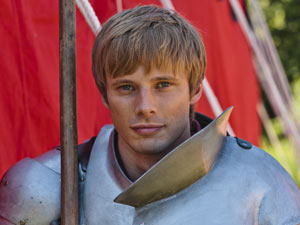
As is often with Merlin I was distracted by Bradley James - Arthur, now there's one fine figure of a man - but this week I paid special attention to the story since I'd been reliably informed that dear Uther was ready to pop his clogs. No more sitting like Golem in a corner for the defunct King, he was off to meet his maker. 
I should say that I'd hoped he'd get a great send off, perhaps Morgana would break into his chambers and stab him in his sleep? Or maybe the horrid Uncle would sneak in and finish him off? A las no sneaky stabbings occured. Instead the random wormy guy that I last saw in Rose and Malone popped up for a short stint as a fake jester. Spiking Arthur's apple before attempting to kill the drugged up prince, inadvertently led to a quick clashing of blades and the eventual death of Uther. 

And that was that. 

Well not quite, but essentially the hard-line king met his death at the end of some randomer's blade. Disappointing.

But Merlin - being Merlin - went on to redeem itself. In a lovely twist Merlin hurried on Uther's death with a magical mix up and Morgana's remote intervention. 

How will he cope with the knowledge he ended all sorcerers hope of no longer living in fear? that he killed the king? Well that's all to come!

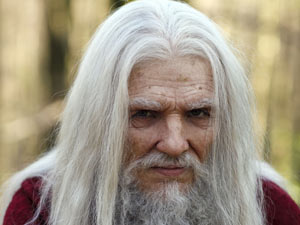
Leaving me with nothing else to say, but that it was pretty funny to see 'old Merlin' again. Comedy sat well amongst the darkness of the rest of the episode. It's what Merlin does best. So the a quirky banter exchange between Merlin the elder and Arthur the younger Merlin sealed the deal - I'll be tuning in next week. There's still Bradley James to drool over!

That just leaves me to share this...
Merlin really has let himself go...


Saturday, July 16, 2011

Rule Britannica?


Britannica in book form

Encyclopaedia Britannica has been ranked the 10th strongest consumer brand in the UK. With the internet dominated by free reference sites, what's its appeal?


You're sitting at your desk trawling Google for a BA flight on your Microsoft desktop, sipping a Coca Cola, while wearing your Rolex and checking your Apple iPhone... with your old leather bound Encyclopaedia Britannica close to hand.


It's not hard to spot the odd one out in the above rundown of brands likely to have your average label junkie salivating at the mouth.
In a world where Wikipedia is THE first port of call for many millions of internet users, a paid-for encyclopaedia, such as Britannica, risks looking like an ageing and ailing relative.
But a poll of Britain's top consumer brands has placed Encyclopaedia Britannica in 10th place.
In the annual Superbrands survey, Britannica leapt a notable 19 places from last year, pitching it just below Apple, one rung above Virgin Atlantic.
How can its brand appeal be explained? And when internet users have become increasingly accustomed to getting information for free, who still pays for encyclopaedias?
Strong pedigree
Reputation and reliability are what people vote for when rating a brand, says Stephen Cheliotis, chairman of the Superbrands Expert Council. The council draws up a shortlist of 1,400 brands which the public is invited to vote for.
BRITANNICA V WIKIPEDIA
Britannica - Wikipedia
Britannica
First published 1768 in Scotland
Oldest English language encyclopaedia still in print
Contains 40m words, approx on 500,000 topics
Time magazine dubbed the Britannica the "Patriarch of the Library"
Offices around the world
Wikipedia
Launched January 2001
Biggest multi-national free encyclopaedia in world
13m articles, 2.9m in English
Run by 23 employees in California
Many users describe it as a starting point
"Britannica matches all the criteria for a 'superbrand'. Quality, reliability and distinction - it's different from its peers," says Mr Cheliotis. "It has been around a long time, and even with the challenge of newer online rivals it is still seen as more credible."
Britannica, which has a pedigree of more than 200 years, is confident that its information is worth paying for. Compiled by 4,000 experts and academics from around the world it has built its reputation on reliability.
The growth of the internet has seen the publisher shift its operation online. An annual subscription to the site comes in at just under £50 and it claims 40 million subscribers worldwide. The encyclopaedia is still published in book form, with 10,000 of the 32-volume sets sold each year, according to the company.
But while Britannica's subscriber base is still strong, its consumer profile is surely dwarfed by names such as Nintendo, Marks & Spencer and Duracell - which all rank below it in the Superbrands top 10.
Ian Grant, managing director of Britannica UK, says the company's recent marketing campaign - which stressed its difference from free web-based reference sites - has helped push it.
Crusty professor
"It's about personality. We've gone from a crusty old professor in a corner who woke up when poked, to an inspirational teacher.
"We're a paid service demonstrating value. Positioned in a world with Wikipedia, our slogan 'Know for sure' has been the focus," says Mr Grant. "People are just beginning to understand the difference between rigorously generated info and user-based. We talk about reliability a lot"
 They're a chisel, we're a drill, and you need to have the correct tool for the job 
Ian Grant on rival Wikipedia
MD for Britannica UK
But Britannica's reliability has been questioned - notably in a 2005 study by Nature magazine which claimed to have found almost as many inaccuracies in Britannica as in Wikipedia, based on a sample of articles. Britannica claimed the study was flawed and misleading.
In academic circles, where mention of Wikipedia as a source will likely meet with a heavily arched eyebrow, Britannica and other more traditional, and accountable, reference forms still hold sway.
"Wikipedia is a fun site to use and has a lot of interesting entries on there, but their approach wouldn't work for Encyclopaedia Britannica. They're a chisel, we're a drill, and you need to have the correct tool for the job."
Maybe the real reason for the Britannica's rise in the brand stakes lies in the falling fortunes of other traditionally dependable names like Nike (last year 9th, this year 29th) and Sony (10th last year, 22nd this year).
"Other brands have fallen down - Britannica has leapt over others who haven't done so well," explains Mr Cheliotis. "But really it's a combination of reputation and the poor performance of previously high ranking brands."
Jedi spoofing
"It's not as sexy or topical or in the news as often. But it makes its rise that much more impressive."
But not everyone is so convinced. A strong web presence does not explain the jump up the table, says Tim Alber, a leading branding and marketing expert.
"Britannica branching out [on to the internet] and taking on Wikipedia and other online sites may have affected the result but it's still very extreme."
"It reminds me of the census, when the public - as a joke - put their religion down as Jedi Knights," says Mr Alber, senior fellow at London Business School. "A group of individuals agreed to list their religion as Jedi in the last census, manipulating the results as a prank."
But Mr Cheliotis denies the survey, which invites the public to vote, online, has been spoofed.
"There is no chance to collaborate, and no one knows when it will happen," says Mr Cheliotis. "They wouldn't be able to fix the result as it goes through an independent council who check the brands."
For the original article on the BBC and comments made click here.

 
Design by Free WordPress Themes | Bloggerized by Lasantha - Premium Blogger Themes | Macys Printable Coupons