Saturday, July 16, 2011

Rule Britannica?


Britannica in book form

Encyclopaedia Britannica has been ranked the 10th strongest consumer brand in the UK. With the internet dominated by free reference sites, what's its appeal?


You're sitting at your desk trawling Google for a BA flight on your Microsoft desktop, sipping a Coca Cola, while wearing your Rolex and checking your Apple iPhone... with your old leather bound Encyclopaedia Britannica close to hand.


It's not hard to spot the odd one out in the above rundown of brands likely to have your average label junkie salivating at the mouth.
In a world where Wikipedia is THE first port of call for many millions of internet users, a paid-for encyclopaedia, such as Britannica, risks looking like an ageing and ailing relative.
But a poll of Britain's top consumer brands has placed Encyclopaedia Britannica in 10th place.
In the annual Superbrands survey, Britannica leapt a notable 19 places from last year, pitching it just below Apple, one rung above Virgin Atlantic.
How can its brand appeal be explained? And when internet users have become increasingly accustomed to getting information for free, who still pays for encyclopaedias?
Strong pedigree
Reputation and reliability are what people vote for when rating a brand, says Stephen Cheliotis, chairman of the Superbrands Expert Council. The council draws up a shortlist of 1,400 brands which the public is invited to vote for.
BRITANNICA V WIKIPEDIA
Britannica - Wikipedia
Britannica
First published 1768 in Scotland
Oldest English language encyclopaedia still in print
Contains 40m words, approx on 500,000 topics
Time magazine dubbed the Britannica the "Patriarch of the Library"
Offices around the world
Wikipedia
Launched January 2001
Biggest multi-national free encyclopaedia in world
13m articles, 2.9m in English
Run by 23 employees in California
Many users describe it as a starting point
"Britannica matches all the criteria for a 'superbrand'. Quality, reliability and distinction - it's different from its peers," says Mr Cheliotis. "It has been around a long time, and even with the challenge of newer online rivals it is still seen as more credible."
Britannica, which has a pedigree of more than 200 years, is confident that its information is worth paying for. Compiled by 4,000 experts and academics from around the world it has built its reputation on reliability.
The growth of the internet has seen the publisher shift its operation online. An annual subscription to the site comes in at just under £50 and it claims 40 million subscribers worldwide. The encyclopaedia is still published in book form, with 10,000 of the 32-volume sets sold each year, according to the company.
But while Britannica's subscriber base is still strong, its consumer profile is surely dwarfed by names such as Nintendo, Marks & Spencer and Duracell - which all rank below it in the Superbrands top 10.
Ian Grant, managing director of Britannica UK, says the company's recent marketing campaign - which stressed its difference from free web-based reference sites - has helped push it.
Crusty professor
"It's about personality. We've gone from a crusty old professor in a corner who woke up when poked, to an inspirational teacher.
"We're a paid service demonstrating value. Positioned in a world with Wikipedia, our slogan 'Know for sure' has been the focus," says Mr Grant. "People are just beginning to understand the difference between rigorously generated info and user-based. We talk about reliability a lot"
 They're a chisel, we're a drill, and you need to have the correct tool for the job 
Ian Grant on rival Wikipedia
MD for Britannica UK
But Britannica's reliability has been questioned - notably in a 2005 study by Nature magazine which claimed to have found almost as many inaccuracies in Britannica as in Wikipedia, based on a sample of articles. Britannica claimed the study was flawed and misleading.
In academic circles, where mention of Wikipedia as a source will likely meet with a heavily arched eyebrow, Britannica and other more traditional, and accountable, reference forms still hold sway.
"Wikipedia is a fun site to use and has a lot of interesting entries on there, but their approach wouldn't work for Encyclopaedia Britannica. They're a chisel, we're a drill, and you need to have the correct tool for the job."
Maybe the real reason for the Britannica's rise in the brand stakes lies in the falling fortunes of other traditionally dependable names like Nike (last year 9th, this year 29th) and Sony (10th last year, 22nd this year).
"Other brands have fallen down - Britannica has leapt over others who haven't done so well," explains Mr Cheliotis. "But really it's a combination of reputation and the poor performance of previously high ranking brands."
Jedi spoofing
"It's not as sexy or topical or in the news as often. But it makes its rise that much more impressive."
But not everyone is so convinced. A strong web presence does not explain the jump up the table, says Tim Alber, a leading branding and marketing expert.
"Britannica branching out [on to the internet] and taking on Wikipedia and other online sites may have affected the result but it's still very extreme."
"It reminds me of the census, when the public - as a joke - put their religion down as Jedi Knights," says Mr Alber, senior fellow at London Business School. "A group of individuals agreed to list their religion as Jedi in the last census, manipulating the results as a prank."
But Mr Cheliotis denies the survey, which invites the public to vote, online, has been spoofed.
"There is no chance to collaborate, and no one knows when it will happen," says Mr Cheliotis. "They wouldn't be able to fix the result as it goes through an independent council who check the brands."
For the original article on the BBC and comments made click here.

Wednesday, July 13, 2011

Evening with Sr Wendy Beckett


St Paul's Bookshop hosted the launch of Sr Wendy Beckett's new books on Tuesday 12 July. 


Sister Wendy Contemplates the Iconic Jesus, published by ST PAULS) is the second in a series of books in which she offers spiritual commentaries on works of art, the first in the series being Saint Paul in Art. Whilst icons are not strictly works of art, they are in fact representations of the divine, "written" under strict guidelines. Her books clearly show that Sister Wendy still has the ability to interpret the sacred in a way that touches the heart and the soul. In his speech at the launch of the book, Archbishop Vincent Nichols of Westminster thanked publishers for continuing to make Sister Wendy’s writings available and said of her, "You allow people to take another step towards the Lord."

My photos made an appearance on their blog here. 

Tuesday, July 12, 2011

Back from Brussels


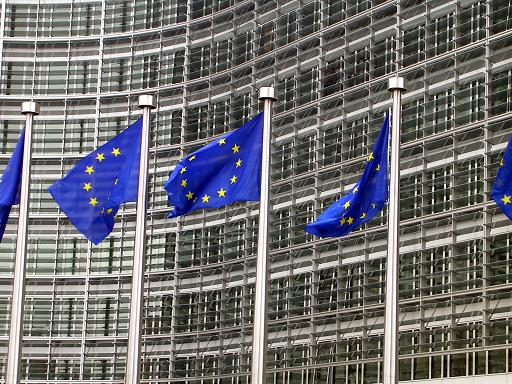
The interns are back from Brussels after an intense few days learning about the EU, how COMECE works and...forestry!

The trip provided us with a unique chance to understand the EU - love it or hate it - as well as see how the European machine all fits together. We saw how different groups view each other and what they do, and interestingly what the EU sees as religions role in the greater running of the European Parliament, Commission and Council.

For me one of the most fascinating chats we had was with the man responsible for religious dialogue at the European Commission - he say it as his job to let them all have a chance to contribute and air their problems. This was good. However, he also noted that they weren't allowed to talk about contentious issues such as abortion, euthanasia - as 'the EU knows their stance on these issues', I found this a bit more disheartening, that religion didn't get to logical explain our stand points.

Thankfully, the World Youth Alliance are there to fill this gap. I really enjoyed our talk by the WYA, where the members explained what they do, how they campaign and how they lobby Parliament. This direct tactic and the conviction they had was impressive and inspiring. It made me believe that Youth have a voice at the European stage on life issues.

Although we only had two days of meetings we packed a lot in!

Next we're off to visit a Prison with Fr Malachy.

Thursday, July 7, 2011

Parish Profile: St Patrick's, Soho Square

For a church that plays such an important role in the community, the entrance to St Patrick’s Church is very unassuming. Walking through the streets of Soho surrounded by bright lights, party music and numerous watering holes, the casual passerby could be forgiven for missing the small portico that leads to one of the oldest Catholic churches in London. Take the time to look inside, however, and you’ll be met with a stunning, newly renovated church. 

St Patrick’s was the first church in England to be built after the Reformation, founded in 1792. During this period the Catholic population in London doubled, so much so that within ten years London’s total regular Mass goers had grown to 150,000 a week.


For many years the majority of St Patrick’s parishioners were poor Irish, but more recently the church has welcomed residents of many other European countries leading to Mass being celebrated every week not only in English but Spanish, Portuguese and Cantonese. 
For the past year, however, Masses have been celebrated in the dining room of the presbytery while parishioners waited patiently for major refurbishment work to the church, costing £3 million, to be completed. 


Reopening its doors


St Patrick’s reopened its doors on 31 May 2011. The reopening came as a relief to parish priest Fr Alexander Sherbrooke. 600 people attended the reopening Mass, 170 were at Vespers, and 200 people attended the Mass of the Ascension. James Conley, Auxiliary Bishop of Denver, and Cardinal Pell from Sydney came over to England to join in the celebrations. 
Fr Alexander said: “They loved being here and said these had been some of the most wonderful days of their lives. People have just been happy to be Catholic.”


Those who have visited St Patrick’s before will understand why the change was so important. Carpets had faded, wallpaper was peeling and the ‘smell of humanity’ lingered in the air. Now the church is a beautiful testimony to the work it does – light, bright and clean.

Fr Alexander said: “People have spoken so clearly about the beauty of the church. People have come up to me and said ‘Wow, now we have a Church in Soho where we can belong and can come and adore the Lord. Thanks Father’. When I’ve been watching people come in to pray, there is a tremendous sense of peace. After years of labour and money-raising people feel that they can commune with God in this place. The love of God, unconditionally into eternity, is a journey all of us are called to. This is now shown at St Patrick’s church in a remarkable way.”


A need for light

One of Fr Alexander’s first moves when he arrived as parish priest nine years ago was to set up Eucharistic Adoration. He explained: “In a place like Soho there is a need to create light, so Eucharistic Adoration is important to St Patrick’s. It acts as a centre to all we do. People can come and be curious and look and see what you are adoring. It draws people in.”
It is this attitude that influences all the parish’s other activities. These range from helping the homeless to evangelising and youth work.

St Patrick’s is home to St Patrick’s Evangelisation School (or SPES, the Latin for “hope”). Students take to the streets to spread the word and evangelise. They speak to people about their faith, offering prayers to those that pass.

From September SPES will be based in the new community centre that will also be home to Open House, which runs every Thursday providing meals for the homeless. St Patrick’s was built two centuries ago with the pennies of the poor, now the poor come to St Patrick’s for help, comfort and a welcoming face.

A centre for evangelisation

Fr Alexander tells me that St Patrick’s is “not just about attracting people who are Catholic”. Quoting Matthew 28:19 he says: “Therefore go and make disciples of all nations, baptizing them in the name of the Father and of the Son and of the Holy Spirit” and reminds me it is our “duty to open our arms” to all who wish to come to church.

“Soho is a very busy part of London and there are an enormous amount of people. We live in a cosmopolitan city and it is important that people find a way into the church, even more so that they find a welcome here,” he explains.

There is clearly an emphasis on evangelising at St Patrick’s. With SPES, outreach projects and a welcoming attitude I ask Fr Alexander how important is the parish’s role as a centre of evangelising.

He says: “I always say the Catholic Church has to be more zealous in evangelisation. St Patrick’s Church and congregation has given us a great confidence to do that.”
More and more people are recognising the role St Patrick’s is playing in the New Evangelisation - a new movement aiming to strengthen and renew our faith in a secular world.

As part of the reopening week celebrations George Weigel, an American author famous for his work on John Paul II, gave a private lecture at St Patrick’s.

Weigel said: “The Church is a mission. Everything the Church does, the Church does to propose Jesus Christ as the answer to the question that is every human life. Everything the Church does, the Church does in order to offer friendship with Jesus Christ as the true means of satisfying the deepest longings of the human heart.”

Fr Alexander hopes this will be reflected at St Patrick’s in the continuing work of the parish. “St Patrick’s hopes to be more of a focus for opportunities for helping people deepen knowledge in faith and teaching,” he says. “We want this to be a place that can give both pastoral outreach and feed the soul.”

In this mission St Patrick’s is already a shining example. With a strong commitment to outreach and a deep spiritual centring to all they do, St Patrick’s will hopefully remain a parish at the forefront of evangelising for many centuries to come.

Wednesday, July 6, 2011

#dow #wyd interview on Twitter!

I interviewed Cherrie Anderson from Ooberfuse in a WYD first
Follow the interview here.

Friday, July 1, 2011

A pilgrim's preparation


Nineb Nersy, 21, a recent graduate and parishioner at St Francis of Assisi, Notting Hill is off to WYD with our diocesan group in August. We spoke to Nineb in our first twitter interview about learning Spanish, his succesful fundraising quiz night and spreading God's word in preparation for Madrid.  
Nineb feels that being chosen to go to WYD has renewed his faith. He has been been to WYD before but is still really excited about Madrid. 
A veteran pilgrim
"I had been to WYD in Sydney in 2008 and had been chosen to represent the parish alongside another parishioner," he tells me. "Since then we've had a new parish priest and when it came to choose representatives for this year's WYD, I was very grateful that I was asked."
"Having experienced WYD before I knew what it’s an unbelievable experience that provides a fantastic opportunity for strengthening in the faith."
"I suggested to Father that if there was anyone else he had in mind I'd be more than happy to give them an opportunity since I had been before, but our priest said he wanted me to represent the parish so I was very humbled and grateful to be chosen."
Bringing the Church together
Nineb feels that WYD is a great opportunity to see the Church together, and the good it does. He is enthusiastic when he talks about the Church's role in bringing people together in faith. He said: "I decided to accept our priest's offer as I knew that WYD truly allows us to see the Church in action, the worldwide Church, coming together and praising Christ. I know WYD will help me in my journey with Christ, by helping me discern my vocation, by filling me with the Holy Spirit."
He also hopes to continue the faith sharing experience when he returns. 
"I know my experience will help me be a witness to the Gospel, to the truth the Church holds and help me evangelise through my life."
Having been to Sydney in 2008, Nineb is curious how Madrid will compare to the succesful event. 
Caring about our faith
"Having been to a WYD before I'm especially looking forward to seeing how it is organised in Spain, and to sample Spanish Catholic culture."
He tells me that he is eager to get out to Spain and join in the festival. 
"I'm looking forward to meeting Catholics from all over the world, it shows that the Church remains strong thanks to the guidance of the Holy Spirit and the truth it holds and that young people care about their Catholicism. Mostly I'm looking forward to truly feeling the presence of Christ amongst the masses of pilgrims."
The Diocese of Westminster have been running preparation sessions for pilgrims joining the diocesan group for WYD, Nineb has been attending these sessions in the lead up to Madrid 2011. 
"I've been to the preparation sessions and they've helped greatly by allowing me to spiritually focus on God and direct my prayer life. They gave me the guidance I needed to truly prepare for the pilgrimage."

"How great will the feeling be when thousands upon thousands are gathered in His name!"

Twitter as a tool for Evangelising  
Nineb announced a week ago he'd try and tweet in Spanish to practice for August! He modestly tells me his Spanish is very basic he's still going to give his twitter promise a go.
"Spanish tweeting was a random moment of inspiration, but given that my Spanish is so bad I think it may not have been well thought out. I’m still going to give it a go though!"
Nineb is making great use of Twitter, not only with his personal account sharing his pilgrim experience, but also to evangelise.
"I've also been inspired to start a Twitter account spreading Saint Paul's Epistles as a form of evangelisation. @SaintPaulsWords is not about WYD but my journey of preparation for WYD inspired me to make it as a modern way of evangelisation."
Nineb is part of Notting Hill parish, he is full of praise for the parishioners, his priests and the school for helping him and his fellow pilgrim raise funds for WYD. They arranged a Quiz night recently that was a great success.
Support by actions, prayer and funds
"In preparation myself and the other pilgrim from my parish ran a Quiz Night to raise funds. The night was very well received and was a great night that everyone who came enjoyed."
The parishioners have been very supportive not just with helping pay for the trip, but in other ways too.
"Our parishioners have been very supportive, both through their actions and prayers, and through their generosity we've been to raise more money than we needed! My family as well have been a massive help and guide and support. Teachers, parents and children at our parish school have also been a massive support in my preparation."
Embracing Catholicism
So how else has Nineb been making sure he's ready for WYD? He explains: "Aside from that I've been preparing spiritually by trying to read the Bible more. I've also been to Adoration of the Blessed Sacrament for moments of contemplation. I've started reading the Pope's recent books on Jesus too as well as the Catechism. All in all preparing for WYD really inspired me to really embrace my Catholicism more and more."
With just over a month to go, I ask what Nineb if he's thought about what he will most enjoy about WYD. 
"Just being with fellow young Catholics, in the presence of the Pope, and truly feeling the presence of Christ amongst us." he says. "For as Christ said whenever two or three are gathered in my name I am among them. How great will the feeling be when thousands upon thousands are in His name!"

 
Design by Free WordPress Themes | Bloggerized by Lasantha - Premium Blogger Themes | Macys Printable Coupons